Panel Upgrades in Jacksonville
A new panel and breakers when the old panel is worn out, full or too small for what the house runs today.
The electrical panel is where power from the utility divides into the circuits that run the house, each one guarded by a breaker. When a panel wears out, runs out of room or is too small for what the house now asks of it, a panel upgrade replaces it with a new panel and breakers, and sometimes with a larger service from the meter in.
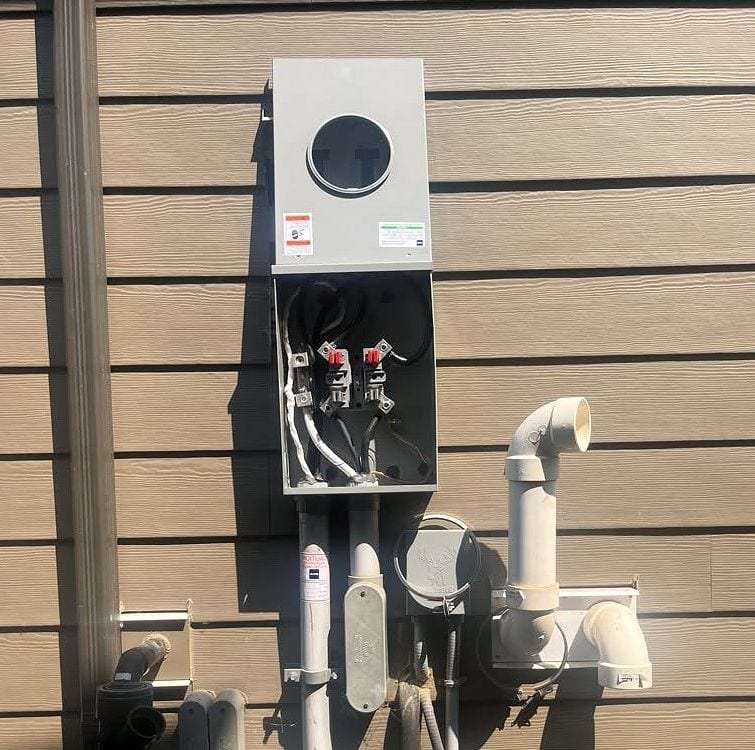
Circuit breaker replacements are part of the same work, since one worn breaker doesn’t always mean a new panel. When the panel itself is the problem, or the house needs room for a new appliance, an addition or an EV charger, a new panel is the lasting fix.
Signs an Electrical Panel Is Wearing Out
Panels tend to give warnings before they fail:
- Breakers that trip often, or won’t stay on once reset
- A warm breaker or panel cover, or a buzzing sound from the panel
- Rust or corrosion on the enclosure, the breakers or the screws
- Scorch marks, melted insulation or a burning smell
- No open spaces left, or two wires crowded under one breaker screw
- Lights that dim sharply when the air conditioner or dryer starts
- Fuses instead of breakers, or a brand with a poor record of breakers that fail to trip
Heat, buzzing, rust and scorch marks are reasons to call soon rather than wait. A breaker that keeps tripping can be a problem on one circuit rather than in the panel, and it’s worth knowing which first.
Older Panels in Arlington, Southside and Mandarin
Many 1950s to 1970s ranch houses in Arlington and parts of Southside still have small services of 60 to 100 amps, sized for a house without central air or a second refrigerator. Some carry Federal Pacific Stab-Lok or Zinsco panels, brands with a poor record of breakers that fail to trip, which leaves the wire to overheat.
The subdivisions built in Mandarin, Southside and Baymeadows from the 1980s to the 2000s have a newer version of the problem: builder-grade panels now 25 to 40 years old, often full, in garages where owners want EV chargers and workshop circuits. In this humid climate, a panel in a hot garage or on an outside wall also shows its age in rust on the enclosure and the breaker connections.
Reasons to Upgrade a Panel
The reason decides the size of the job: adding capacity can also mean a new meter base and larger service wires.
| Reason to upgrade | What it means | Typical trigger |
|---|---|---|
| More capacity | More amps than the service delivers, often a move from 100 to 200 amps | An EV charger, central air, an electric range or an addition |
| Room for new circuits | Every space in the panel is taken | A remodel, or an appliance that needs a circuit of its own |
| Worn breakers | Breakers trip too easily, or fail to trip at all | Frequent trips, warm or buzzing breakers |
| A brand with a poor record | A Federal Pacific Stab-Lok or Zinsco panel | Buying or renovating an older house |
| Newer protection | AFCI and GFCI breakers the old panel can’t take | A kitchen, bathroom or bedroom remodel |
Questions About Panel Size, Breakers and Labels
Is a 100 amp panel enough, or does a house need 200 amps?
Should a Federal Pacific or Zinsco panel be replaced?
Can a single breaker be replaced without a new panel?
Why do the circuits in a panel need to be labeled?
How long does an electrical panel last?
What Replacing a Panel Involves
Most panel replacements follow much the same order:
- Sizing the panel. A load calculation adds up what the house runs and decides the panel’s size and whether the service needs to grow.
- A permit where required. Panel and service changes generally need one before the work starts.
- Power off at the meter. The utility (JEA in most of Jacksonville) disconnects the service so the panel can be worked on safely.
- The old panel out. Each circuit is disconnected and marked, and the old enclosure and breakers come out.
- The new panel in. Grounding and bonding are brought up to current requirements, and each circuit goes onto a new breaker.
- Every circuit labeled. Each breaker is marked with what it feeds.
- Inspection and reconnection. An inspector checks the work where required, and the utility restores power.
The house has no power while the panel is changed, so plan around refrigerators and medical equipment. It is also the natural moment to add a whole-home surge protector: the electrical code Florida follows now calls for one when a home’s service equipment is replaced.
Spring is the time to check panels and outdoor outlets Summer storms are hard on surge protection and GFCIs After hurricane season, look over outdoor wiring Winter brings space heaters onto older circuits