Breaker Troubleshooting Guide for Jacksonville Homes
What a tripping breaker is telling you, how to reset it safely, and when to leave it off and call.
Every circuit in a house, from the laundry room lights to the kitchen outlets, runs back to its own breaker, which switches itself off when the circuit carries more current than its wire is made for, or when current leaks where it should not. A trip is the breaker doing its job; the question is why.

Timing tells you most of it: an overload trips after a while, and a short circuit or a ground fault trips the moment the breaker goes back on.
Find the Likely Cause
Pick a symptom for its usual causes, a safe check and how soon to call.
Pick a symptom and press the button to see likely causes and a safe next step.
Resetting a Tripped Breaker Safely
- Unplug or switch off what was running on that circuit, such as a space heater.
- Open the panel door with dry hands, on a dry floor, and leave the inner cover in place. If the floor is wet or the panel is warm, buzzing or smells of burning, stop and call.
- Find the tripped breaker: its handle rests between ON and OFF, sometimes with a colored flag showing.
- Push it firmly all the way to OFF until it clicks, then back to ON, with your face turned to the side.
- If it holds, plug things back in one at a time, the heaviest last.
- If it trips again at once, leave it at OFF: another try will not clear a short.
GFCI and AFCI breakers reset the same way; their Test button is not the reset.
What a Trip Usually Points To
| What you notice | Likely cause | What you can check | When to call |
|---|---|---|---|
| Trips the moment it is reset | A short or ground fault in a cord, appliance or the wiring | Unplug everything on the circuit, then try one reset | Call now if it trips with nothing plugged in |
| Trips after a few minutes or when an appliance starts | An overload, or a motor’s starting draw | Move a heater or hair dryer to another circuit | Can wait if that stops it; book soon if not |
| Trips in storms or heavy rain | Water in an outdoor outlet, fixture or box | Look for open or cracked covers, and let things dry | Book soon if it trips again once dry |
| A GFCI outlet keeps tripping | Moisture, an appliance leaking current, or a worn GFCI | Unplug what it protects, then press Reset | Book soon if it trips with nothing plugged in |
| Won’t reset, or feels loose or warm | A worn breaker or a poor grip on the panel’s bus bar | Make sure it went fully to OFF first | Call now and leave it off |
| The whole panel or half the house is dark | The main breaker, a utility outage, or a lost incoming leg | Check the main breaker and whether neighbors are out | Call now: your utility first, then an electrician |
Questions About Tripping Breakers
Is it safe to keep resetting a breaker that trips?
Can I replace a breaker that keeps tripping with a bigger one?
Why does a breaker trip at night or when the air conditioner starts?
What should I check if a breaker tripped during a storm?
What does it mean when a breaker feels loose or warm?
Signs a Trip Is More Than an Overload
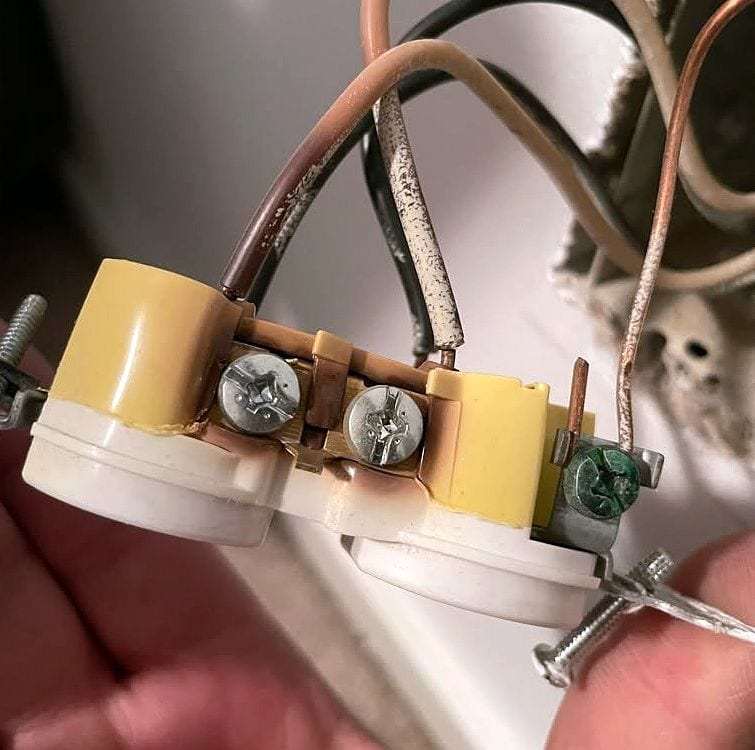
A trip is sometimes the first sign of a connection that has been overheating: a loose wire on an outlet’s terminal screw heats with every load, until the screws scorch and the insulation browns behind a clean cover plate.
With any of these, keep the breaker off and call rather than reset:
- A burning, hot-plastic or fishy smell
- A panel cover that feels warm
- A breaker that is hot to the touch
- Buzzing or crackling from the panel or a wall box
- Scorch marks or melted plastic on an outlet, switch or panel
- Sparks from the panel or an outlet
- Water on or above the panel
When a Repair Is the Next Step
Some 1950s–1970s ranch houses in Arlington and parts of Southside have Federal Pacific Stab-Lok or Zinsco panels, brands with a poor record of breakers that fail to trip, so in those houses a breaker that never trips proves little.
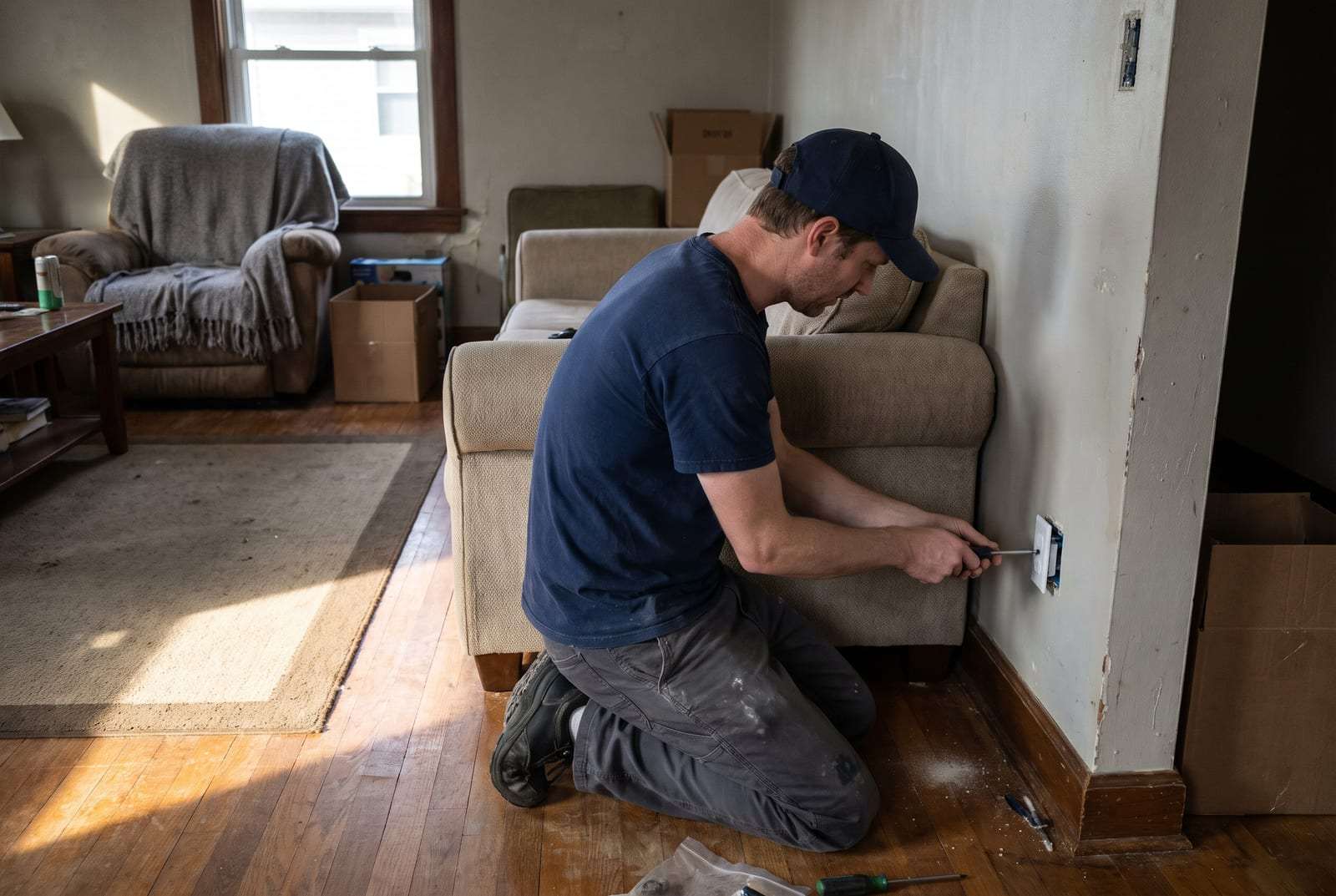
When a trip comes back to worn wiring, a scorched outlet or a tired breaker, the answer is an electrical repair, which usually starts with tracing the circuit from the panel to its last outlet.
Spring is the time to check panels and outdoor outlets Summer storms are hard on surge protection and GFCIs After hurricane season, look over outdoor wiring Winter brings space heaters onto older circuits