Electrical Repairs in Jacksonville
Tripped breakers, dead outlets, flickering lights and worn wiring, traced back to the cause and fixed.
Most electrical repairs start with something small: a breaker that won’t stay on, an outlet gone dead, a light that flickers. Each is a symptom, and the repair is finding and fixing the cause behind it, whether a loose connection, a worn device or a circuit carrying more than it should.
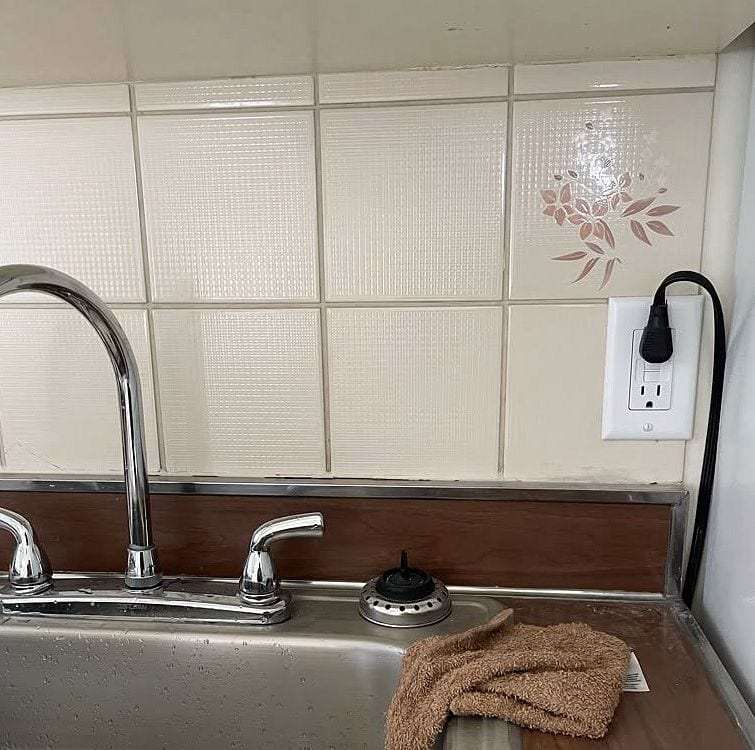
Repair visits cover troubleshooting, outlet and GFCI work, ceiling fan and lighting installation, dedicated circuits for appliances and rewiring in older houses. They’re for homeowners, landlords and property managers with rental units, and small businesses such as offices, shops and restaurants. The first job on any of them is finding the cause, so the fix matches the fault.
Tripped Breakers, Dead Outlets and Flickering Lights
A Breaker That Keeps Tripping
A breaker trips to protect the wire behind the wall, and an overloaded circuit is the usual reason. One that trips again the moment it’s reset points to a short or a ground fault; one that holds for a while and then trips points to an overload, which a dedicated circuit for the heavy appliance often solves. It pays to know how to reset a breaker safely, and when to leave it off.
An Outlet That Stopped Working
When outlets go dead and no breaker has tripped, look first for a tripped GFCI elsewhere: one in a bathroom, the garage or on the porch often protects ordinary outlets further along the circuit. If resetting it doesn’t help, the cause is usually a loose wire at the dead outlet or the one before it.
Lights That Flicker or Dim
A single flickering fixture usually means a loose bulb, an LED bulb on a dimmer not made for LEDs, or a loose connection. Flickering across the whole house can mean a loose connection at the service or a failing neutral, and it needs an electrician soon.
Which Problems Can Wait and Which Cannot
Some problems are an inconvenience; others mean something is overheating. When in doubt, treat a problem as the more urgent kind.
| Symptom | Possible cause | Safe to wait or call now |
|---|---|---|
| Burning smell, heat or sparks at an outlet or the panel | Wire or connection overheating | Call now |
| Breaker trips again right after it’s reset | Short circuit or ground fault | Call now |
| Lights flicker all over the house | Loose service connection or a neutral problem | Call now |
| Breaker trips when a few appliances run at once | Overloaded circuit | Book soon |
| A GFCI outlet trips again and again | Moisture, an appliance with a fault or a worn GFCI | Book soon |
| One light flickers | Loose bulb, a dimmer not made for LEDs, or a loose wire | Can wait a few days |
Signs to Stop and Call an Electrician
Stop using the circuit, switch it off at the breaker if that’s safe, and call an electrician when you notice:
- A burning or hot-plastic smell from an outlet, switch, fixture or the panel
- An outlet, switch or panel that feels warm, buzzes or crackles
- Sparks, scorch marks or a melted plug
- A breaker that trips again right after you reset it
- Lights flickering across the whole house
- Water near wiring, outlets or the panel
- A shock or tingle from a switch, an appliance or a fixture
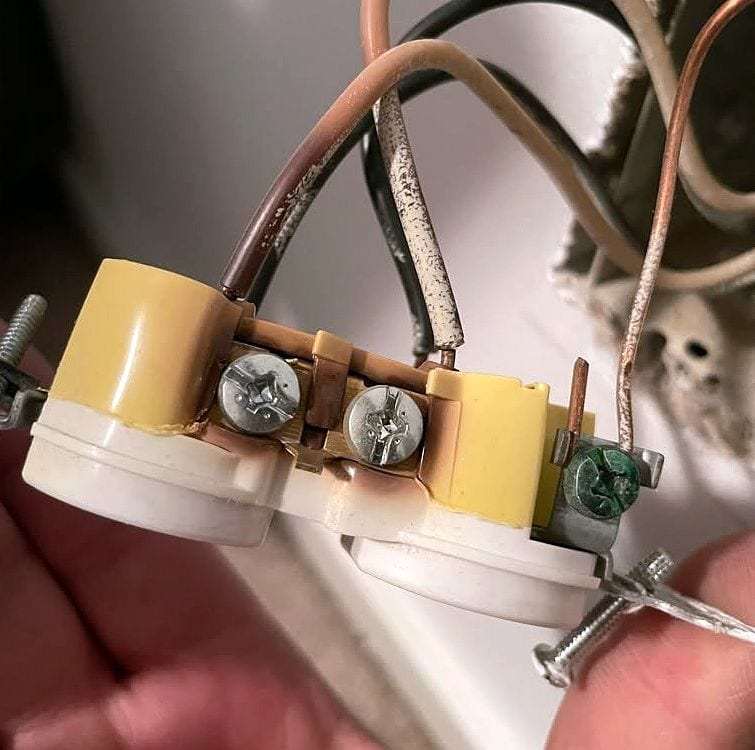
A scorched outlet usually starts at a terminal screw, where a loose wire heats up each time the outlet carries a load until the insulation browns and the device fails. A standard breaker often won’t trip while this happens, because it reacts to too much current, not to a poor connection.
If there is smoke or flame, leave the house and call 911 first.
Questions About Outlets, Fans and Flickering Lights
Why does a GFCI outlet keep tripping?
Is it normal for an outlet or switch to feel warm?
Why do LED bulbs flicker on a dimmer switch?
Can a ceiling fan go where a light fixture is now?
Do two-prong outlets in an older house need to be replaced?
Older Wiring in Riverside, San Marco and Arlington
Many 1920s to 1940s houses in Riverside, Avondale and San Marco still have some original cloth-insulated wiring, turned brittle by age and heat, along with two-prong outlets and now and then knob-and-tube in the attic. In Arlington and parts of Southside, some 1950s to 1970s ranch houses have aluminum branch wiring, which can overheat at outlets and switches not made for it; the usual repair joins a short copper lead to the aluminum at each device with approved connectors.
Rewiring an older house usually means fishing new cable through the walls from the attic or a crawl space, with small openings rather than walls opened to the studs, and it often goes together with a panel upgrade.
Spring is the time to check panels and outdoor outlets Summer storms are hard on surge protection and GFCIs After hurricane season, look over outdoor wiring Winter brings space heaters onto older circuits