
About Baymeadows Electric
A Jacksonville electrical company that started with small residential repairs and has stayed hands-on.
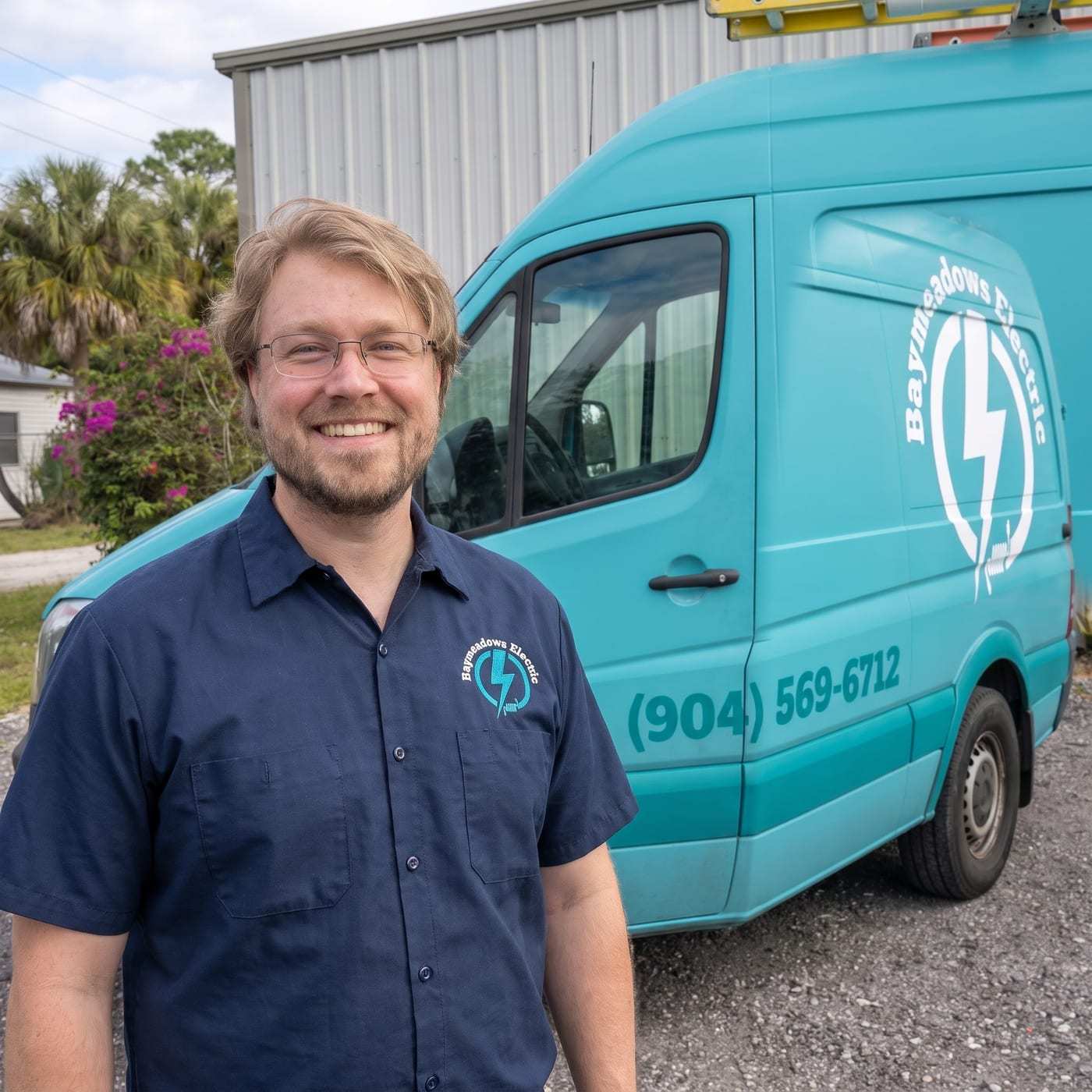
Steven Harris
Steven learned the trade as a helper on a residential crew, where his first job was pulling wire and setting boxes in new houses before the drywall went up. Working inside open walls taught him how a building is put together, why tight connections and clear panel labels matter, and how much easier a repair is when the original work was careful.
He started Baymeadows Electric in Jacksonville in 2012 to bring that kind of attention to homeowners and small businesses, beginning with small residential repairs and fixture installs. Today he takes on the troubleshooting visits in person.
What the Company Does Now
The company has grown from those first repair calls, but the work is still hands-on and local. Today it covers panel upgrades, circuit breaker replacements, rewiring in older houses, ceiling fan and lighting installation, outlet and GFCI work, dedicated circuits for appliances, EV charger wiring, and troubleshooting for flickering lights, tripped breakers and dead outlets.
The customers are homeowners, landlords and property managers with rental units, and small businesses such as offices, shops and restaurants around Jacksonville, including Mandarin, San Marco, Arlington and Orange Park.
The Houses and Buildings Behind the Work
Jacksonville’s housing covers a long stretch of electrical history. Bungalows and two-story houses from the 1920s through the 1940s in Riverside and San Marco can still have cloth-insulated wiring and two-prong outlets. Ranch houses from the 1950s and 1960s in Arlington were built for a fraction of the load a modern kitchen and central air put on them. The subdivisions of Mandarin, Southside and Baymeadows from the 1980s and 1990s have panels that are now decades old and garages where people want to charge a car.
Rental units bring their own kind of call: a tenant reporting a dead outlet, a GFCI that will not reset or a fixture that stopped working. Offices, shops and restaurants run more equipment on fewer circuits than a house, and a breaker that trips at the start of a lunch rush is a different problem from one that trips in a spare bedroom. Either way, the job starts the same: finding out why it happened before deciding what to replace.
Spring is the time to check panels and outdoor outlets Summer storms are hard on surge protection and GFCIs After hurricane season, look over outdoor wiring Winter brings space heaters onto older circuits