Electrical Maintenance Guide for Jacksonville’s Climate
Seasonal checks that keep humidity, salt air and summer storms from wearing on your outlets, fixtures and panel.
Northeast Florida wears on electrical equipment slowly. The air stays humid most of the year, thunderstorms roll in most summer afternoons from June through September, and hurricane season runs from June 1 to November 30. Moisture works into outdoor boxes, corrodes screws and terminals, and turns small faults into tripped GFCIs and scorched connections.
Plan Your Seasonal Checks
Choose what your home has for a list of checks by season.
Choose what your home has and press the button to see the checks for each season.
Testing GFCI Outlets
A GFCI outlet cuts the power in a fraction of a second when current leaks to ground, through a wet hand or a damaged cord. Newer work puts GFCI protection in bathrooms, kitchens, garages, laundry areas and outdoors, and one GFCI can protect several outlets wired after it. Manufacturers ask for a test every month.
- Plug a lamp or a plug-in tester into the GFCI and switch it on.
- Press Test. The lamp should go out and the Reset button should pop out.
- Try the outlets nearby, such as the next bathroom or the porch. Any that went dead are protected by this GFCI.
- Press Reset firmly until the lamp comes back on.
- If the lamp stays on after Test, or Reset will not stay in, the GFCI needs replacing.
A GFCI breaker in the panel tests the same way, with the Test button on the breaker.
Moisture, Salt Air and Outdoor Outlets
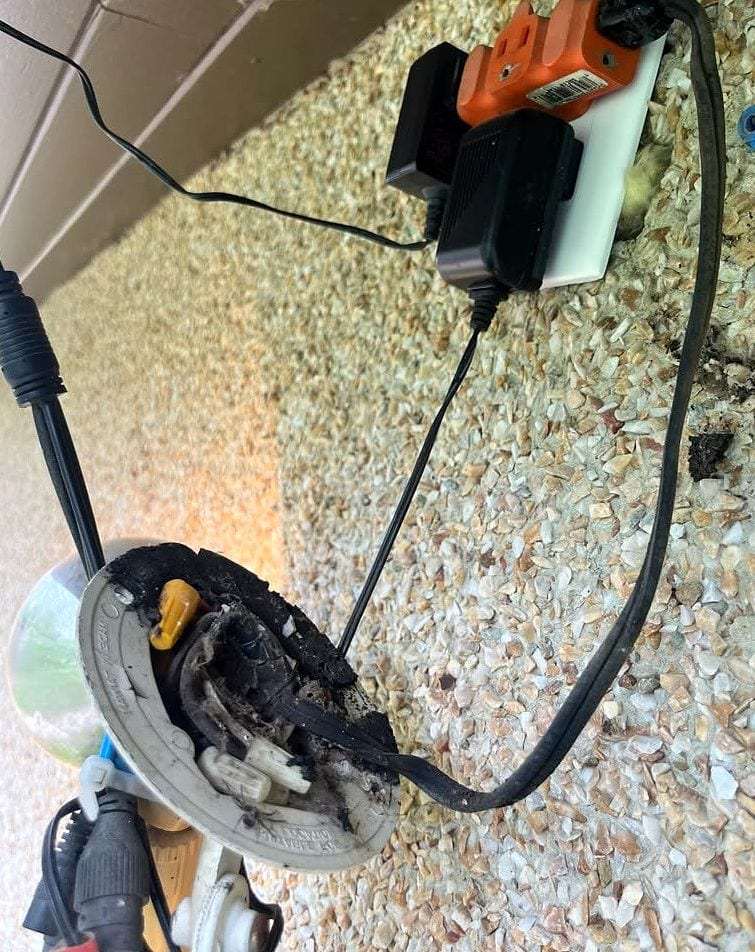
Outdoor outlets and fixtures take the worst of the climate. Humid air condenses inside boxes, wind-driven rain gets past flat covers, and near the Beaches salt settles on every exposed screw. Corrosion loosens connections, a loose connection heats, and an outdoor outlet feeding a tangle of extension cords can heat a fixture until it melts.
Look over outdoor outlets, porch lights and the disconnect box beside the air conditioner a few times a year. Rust, white or green crust, cracked covers and a GFCI that trips in every rain mean a device is due for replacing, usually with a weather-resistant outlet under an in-use cover.
Before Hurricane Season Starts
The weeks before June 1 are a calm time to get the electrical side ready:
- Make sure the panel directory is accurate, so you can shut off a flooded room by flashlight.
- Know which handle is the main breaker.
- Keep flashlights and batteries handy rather than counting on candles.
- Close outdoor in-use covers and bring extension cords inside.
- Run a portable generator outdoors, away from doors and windows, with outdoor-rated cords to the appliances. Never plug it into a wall outlet: it can send power back into the utility’s lines and injure line workers.
- If someone relies on powered medical equipment, plan how it will run during an outage.
A whole-home surge protector at the panel, backed by plug-in protectors for electronics, helps limit the surges nearby lightning sends down the lines. If it has a status light, check it before the season starts.
Questions About Moisture, Outdoor Outlets and Storms
What kind of cover does an outdoor outlet need?
Is it safe to use outlets that were under water after a storm?
How does salt air at the beaches affect outdoor wiring?
What should I do when the power comes back after an outage?
What electrical checks does pool equipment need?
Seasonal Tasks and Why They Matter
| Season | Task | Why it matters in humidity or storms |
|---|---|---|
| Spring, March to May | Test GFCIs; check outdoor covers and gaskets | Worn covers let damp air and rain into boxes before the summer storms |
| Before June 1 | Update the panel directory; check surge protection | Hurricane season opens, and a clear directory helps when a room floods |
| Summer, June to August | Unplug spare electronics when a storm is close | Afternoon storms bring frequent lightning and sideways rain |
| Autumn, September to November | Look over outdoor outlets, fixtures and the meter base for rust or scorch marks; test GFCIs again | Months of storms and damp air leave corrosion that loosens connections |
| After a storm or flood | Keep power off to anything that got wet until it is checked | Water and silt in a device can cause shocks or a fire later |
| Winter, December to February | Plug space heaters straight into wall outlets, one per circuit | Cold snaps put heaters on circuits already carrying other loads |
Spring is the time to check panels and outdoor outlets Summer storms are hard on surge protection and GFCIs After hurricane season, look over outdoor wiring Winter brings space heaters onto older circuits